




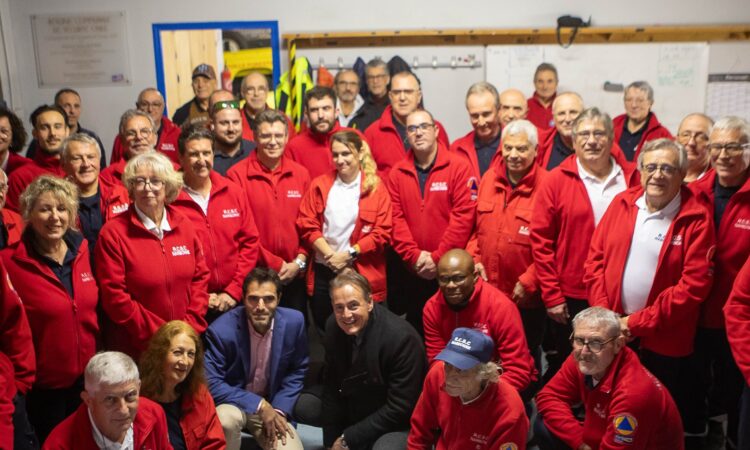
The Communal Civil Security Reserve plays an essential role in the functioning of a municipality: on-call duty, vigilance, logistical support, surveillance of risk areas, post-crisis support, etc.
However, behind this mission of general interest lies a major challenge: to effectively plan on-call duty and distribute the missions without wasting considerable time.
Between the variable availability of volunteers, the specific skills needed according to the interventions or the unexpected, planning quickly becomes a headache.
In this article, we will see how a solution like eBrigade can automate and structure the organization of the reserve.
Planning difficulties in a communal reserve
Changing availability and heterogeneous profiles
Reservists are, by definition, volunteers. They therefore have very different slots depending on:
- their professional schedule,
- their family responsibilities,
- their periods of leave,
- their physical ability or experience.
It is difficult for a manager to create a reliable schedule taking into account all these variables.
Mandatory skills according to the missions
Each mission has its own particularities. Like what:
- for fire patrols, volunteers trained in the surveillance of wooded areas are needed,
- To organise the reception of the population, it requires logistical profiles,
- To accompany traffic during an event, you need members with the ability to intervene safely on public roads.
Without skills tracking, scheduling relies solely on memory or static files.
Spreadsheets, messages and improvisation
Many municipalities still operate with:
- Excel files,
- WhatsApp messages,
- phone calls,
- paper schedules.
Result:
- frequent errors,
- duplicates,
- forgotten reservists,
- Inability to have a global view of the actual coverage.
How eBrigade simplifies day-to-day planning
eBrigade provides a structured, simple and effective response to the challenges of municipalities.
It becomes the central tool for organising on-call duty, planning missions and distributing teams.
On-call duty in a few clicks
The manager can create a complete schedule:
- individual on-call duty,
- on-call teams,
- weekly rotations,
- recurring missions (patrols, surveillance, preventive measures).
All affected members automatically receive a notification to validate their availability.
Automated skill-based allocation
eBrigade identifies the skills of each reservist:
- level of first aid,
- authorisations (e.g. logistics, driving, prevention),
- experience in certain systems,
- internal or external training.
The system can then automatically propose the best possible distribution.
This prevents human error and ensures safety.
Clear dashboard for managers
The manager immediately sees:
- the slots that are still unfilled,
- over-represented teams,
- the most active reservists,
- Tracking hours of engagement.
At a glance, it can adjust and optimize the distribution.
Automatic notifications and reminders
No more forgetting to be on call.
eBrigade sends:
- reminders before the start of each mission,
- notifications of changes to the schedule,
- Acknowledgements of receipt and confirmations.
This drastically reduces involuntary absences.
Case in point: the Narbonne municipal reserve
The municipality of Narbonne has 57 reservists. Before eBrigade, planning was like a real headache.
Before: a heavy and time-consuming manual system
- on-call services managed via a spreadsheet,
- exchange of information via WhatsApp,
- skills noted on a PDF document,
- several errors each month,
- a very variable rate of on-call attendance.
Each beginning of the month required nearly 10 hours of work to prepare the schedules.
After eBrigade: a fluid organization
- complete planning completed in less than 45 minutes,
- skills automatically taken into account,
- reminders sent to volunteers,
- automatic time tracking,
- possibility for reservists to exchange their slots.
Result:
- on-call coverage rate: +27%,
- 80% reduction in management time,
- Fewer last-minute cancellations.
Benefits to the community
A more reliable and structured reserve
The municipality benefits from complete and better distributed coverage.
Elected officials can also anticipate needs (equipment, training, staff).
Better visibility into actual activity
Thanks to the history of the missions and the automatic follow-up:
- number of hours committed,
- participation of each member,
- monthly statistics,
Everything becomes clearer and more valuable to the municipal council.
The end of planning errors
With eBrigade:
- Unable to schedule a reservist with a scheduling conflict.
- impossible to assign a mission to an unauthorised person,
- It is impossible to forget a niche.
Everything is consistent, secure, and automated.
How to set up effective planning in less than a month
A municipality can transform its way of organising quickly:
- Import reservists and their skills into eBrigade.
- Define on-call time slots (daily, weekly, event-based).
- Set up recurring missions (monitoring, surveillance, support).
- Inform reservists via the app.
- Carry out a first test month.
- Adjust the distribution based on feedback.
Most municipalities are operational in just a few weeks .
Conclusion
Planning the on-call duties and distributing the missions of the municipal reserve does not need to be complex.
With eBrigade, municipalities gain in efficiency, serenity and organisational quality.
Less administrative time, more time in the field.
It’s simple, fast and sustainable.